Showing posts with label fish. Show all posts

Saturday, December 25, 2010

Smoked Salmon Chowder (local to Boundary Bay Brewpub)

There's a local Brewpub called Boundary Bay that makes the most incredible Smoked Salmon Chowder. And since we did a roasted chicken with cornbread dressing and all the other trimmings just last month, we decided our Christmas meal might be a good bit simpler, leaving us time for a hike this afternoon.

Here's the infamous chowder recipe—slightly modified—since we're not feeding an army, we've scaled the portions down from the original recipe linked above. Measurements are approximate--so feel free to adjust as needed:

2 cups diced potatoes
1 cup diced carrots
1 1/2 cups onions, chopped
1/2 cup celery, chopped
2 T fresh chopped garlic
1 1/2 cup clam juice
1 1/2 cup white wine (we're using SilverLake Sauvignon blanc)
1 tsp dried thyme
1/2 cup (1 stick) butter
1/2 cup flour
3 cups heavy cream
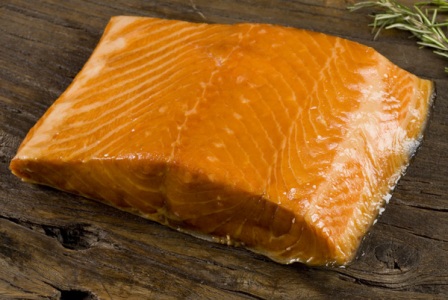
1 cup smoked salmon (approx) I like VIS Seafoods' traditional smoked salmon


In a large, heavy-bottom Dutch oven, sauce or stock pan (5 quart is the size I use) combine the wine, clam juice, and thyme. Add the diced vegetables and boil until tender. Reduce heat to a simmer.
Warm the cream (you can actually do this in a microwave - but be careful not to boil or scald, and if you're aghast at the calories, you can use whole milk). Melt the stick of butter, whisk the flour into the melted butter to make a roux, (keep your heat low, you're looking for white-to-blond roux, not darker—so be careful not to brown the butter or flour) and add in the warmed cream. 
Making sure the clam juice/wine/veggie mix is not actually boiling, add the cream roux into the soup pot, stirring gently. Add the flaked salmon. Let simmer another 15 minutes or so, then serve. This is marvelous in bread bowls, or with crusty hunks of warmed baguette, and the rest of that bottle of white wine you used in the chowder stock.


Have a very Merry Christmas, everyone!

Monday, May 31, 2010

Grilled Salmon!

When I first moved to the Pacific Northwest, I could not eat enough salmon to suit me, and at the time, salmon was extraordinarily reasonably-priced, in-season.

Salmon cooked outside, in the fresh Northwest air, on a charcoal grill has to be one of the finest culinary experiences available, anytime, anywhere. If you've been in the Pacific Northwest for any amount of time, you'll already be familiar with the popularity of good local fresh "salmon bbq"—it took me a little while to realize that doesn't actually mean salmon smothered in a tangy catsup-based sauce; rather, barbecued salmon is simply salmon cooked on a barbecue grill. The best part of that, of course, is that there's no need to wait for a special occasion. Salmon is healthy, delicious, and remarkably easy to prepare.

First, of course, you need a nice piece of fish. I like to plan for 6-8 ounces of fresh fish (uncooked weight) per person served. If you're serving particularly hearty eaters, though, figure 10-12 ounces. Before you decide exactly how much fish you might, you may also want to plan ahead and think about how nice it would be to have cold grilled salmon tomorrow, to top a salad or to mix with a little mayo and some capers.

There are a couple of things you need to know to buy good fish. You can find pretty reasonably-priced salmon at your local supermarket—but chances are it's going to be previously frozen. Now, that's not a deal-breaker by any means, but you want to be certain the flesh is firm and the odor isn't fishy or strong, the color should be bright and your piece of fish should smell like ocean. Whether you prefer the tail-end or the head end will depend partly on how well-done you like your salmon cooked, and whether you like your fish ever-so-slightly fattier. (Salmon fat, by the way, contains an enormous amount of extraordinarily healthy substances, so don't be worrying about the fat content, okay?) The tail-end, for example, is a good deal thinner, so will cook much more quickly. I prefer a nice thick fillet for grilling, because you can cook a single piece of fish big enough to serve everyone. If you happen to be serving a sizable group, you can most certainly grill salmon whole, as well. This is preferable, as far as I'm concerned, because cooking the fish in a single large piece gives you a little more leeway in terms of heat and cooking time.

I like to use a good natural lump charcoal, rather than briquets; again, though, you've got quite a lot of room to use your own favorite grilling technique. You can even use your propane grill and no one will give you any funny looks. If you've not grilled fish before, here's one sure-fire method that will please any salmon-lover, even that picky aunt who always tells you your marinade is a little too strong:
  • Start your charcoal about a half-hour or forty minutes before you plan to begin cooking. You want a nice, hot grill; hot enough to cook a steak, and your charcoal should be evenly and steadily glowing white on the edges.
  • Take your piece of fish out of the refrigerator and let it warm on the counter for ten or fifteen minutes. Squeeze a lemon and chop some fresh dill into a bowl, and save about half your lemon/dill mixture to use on the grill, when you turn the fish.
  • Just before you're ready to pop it onto the grill, rub the fish all over with a little olive oil, lemon, and fresh chopped dill. This is important: OIL THE FISH, NOT THE GRILL. Do I need to say that louder, or did you get it the first time? If you oil the grill, your fish will stick. Also? Don't use any salt on your raw fish. It only draws out the yummy juices before your fish ever gets to the grill.
  • No matter if you're cooking steaks or a fillet, you only want to turn the fish once, so you don't dry it out. Lay the fillet flesh-side to the grill, which should be hot enough to sear grill-marks into the yummy pink of the salmon. Don't poke at it. You only need to leave the fish flesh-side down long enough to get a good sear, then turn the fillet so the skin-side is on the grill, and baste your fish with a bit of your lemon and dill mixture.
  • Don't overcook your fish. As soon as the thickest part of your fillet begins to separate into flakes when you pull gently with a fork, your fish is done. Serve immediately, with a nice bearnaise sauce if you're feeling fancy, or wedges of lemon if you like to keep it simple.
Most of all, have fun; drink good beer or a fresh, crisp wine, and enjoy your grilled salmon with people you like spending time with. Happy spring, everyone!

Sunday, September 20, 2009

Salmon Patties for under $5

Let's talk about salmon.

Mostly because it's autumn, and since I've moved to the Pacific NW I can't get enough of the stuff. I love salmon. I love to watch them in streams, at the hatchery in the park, on YouTube videos, and down at Pike's Market where the Flying Fish market guys heave them through the air for each other to catch.

And speaking of the fish market, my local fish place, VIS Seafoods, has been running some pretty terrific deals on fresh-caught salmon—but they smoke their own salmon, and they even can their own salmon, as well. If you use a 14.5 ounce can of salmon, one medium egg, a crushed up stack of saltine crackers (you can use the blender for this), and half a small onion, you'll get four smallish salmon patties for about $1.25 each.

Salmon patties were a once-in-a-while treat, when I was a child. There aren't a lot of opportunities for affordable fresh salmon in eastern Montana when you're a rancher raising a bunch of kids; so if we ate fish, generally that meant it was canned or—on rare special occasion—smoked.

Basic salmon patties are one of those absolutely simple recipes that you can tinker with for endless variations, according to your favorite flavor combinations. It's also something that, if you're just learning to cook (and so many youngish people I talk to are doing just that) it's dead easy to try, and hard to screw up too badly.

So you start with cooked salmon, either canned or leftover cooked. (A typical can of salmon, for our purposes, means the 14.5 ounce size.) Flake the salmon with a fork, and be careful to remove any bones. I remove any skin, too, mostly because it grosses me out. It's supposedly hugely nutritious, though. I don't know. It grosses my cat out, too, so it goes into the compost. Outside.
If you're using canned salmon, drain the water and set it aside—if your salmon-patty mixture is too dry, you can add a bit of the water back into the mixture, as needed. I usually go with a couple of tablespoons of mayo, instead of the water, though. Less of a "fishy" flavor, that way.

You'll also need a couple of eggs, and about a half-cup of either bread crumbs, cracker meal, or even yellow cornmeal, depending on your own preference. If you use cornmeal, you'll want to cut that proportion to about a third of a cup.

To that basic mixture, you can add a couple of teaspoons of lemon juice, a half-cup or so of finely chopped onion, and a couple of tablespoons of green pepper, chopped fresh dill, parsley, rosemary or your other favorite herbs and flavors. You can (and should) try some variations, like caramelizing the onion before adding it to your basic salmon-patty mixture.

A pinch of sea salt, a couple of grinds of fresh black pepper, or even a sprinkle of cayenne, if you like a little zing in your food, and you're ready to form patties and place into a heavy skillet with about a quarter of an inch of olive or vegetable oil. If you use olive oil, take care not to let the oil get quite hot enough to smoke. Cook the patties, carefully turning them once, until both sides are nicely browned.

You can serve your salmon patties as simply or as elaborately as you desire. Simple lemon wedges, seafood sauce, tartar sauce, are all favorite accompanying condiments. They're delicious on a toasted bun, with a little shredded lettuce, tomato, and a paper-thin slice of onion, topped with tartar sauce. If you feel like something more elaborate, how about plating the patties onto a simple bed of field greens with dried berries, and a dollop of chilled dill mayonnaise or remoulade?

You can use the same basic recipe for crab cakes, by the way, swapping out lump crab meat for the salmon in the recipe. Go forth, have fun, eat fish!

There are lots and lots of recipes on the web, if you're uncomfortable without exact measurements for a starting place.